The Government of Armenia has formally prioritised integration and local implementation of social protection and labour-market policies. However, it had not yet provided clear guidance, tools, or institutional mechanisms for municipalities to translate these national priorities into practice. Most municipalities, including Vayk Municipality where the project was implemented, lacked the capacity, methods, and coordination needed to operationalise the reforms.
Local civil society organisations (CSOs) and community actors hold valuable knowledge of vulnerable groups and their needs, yet were rarely engaged in systematic or institutionalised ways in local policy processes.
The ‘From Protection to Participation’ project aimed to strengthen the social and economic resilience of refugees and other vulnerable groups in Vayk Municipality through improved access to social protection and employment pathways. It fostered cooperation between municipal authorities, state agencies, CSOs, and community actors to co-design a Local Social Plan that includes inclusive labour market activation measures.
Key activities included mapping services, assessing needs, developing the Local Social Plan, building the capacities of the local social workforce, piloting activation support, and facilitating experience-sharing with Danish partners.
The goal was a more coordinated, evidence-based, and participatory local social protection system that enables Vayk’s leadership to understand community needs and potential, while unlocking hidden opportunities for vulnerable individuals to access income-generating activities and social support.
By fostering collaboration between local authorities, social-service providers, civil society, and the private sector, the initiative sought to help transform Vayk’s social protection system from passive assistance to active inclusion, so that vulnerable residents gain both social security and pathways to sustainable income.
Results: What we achieved
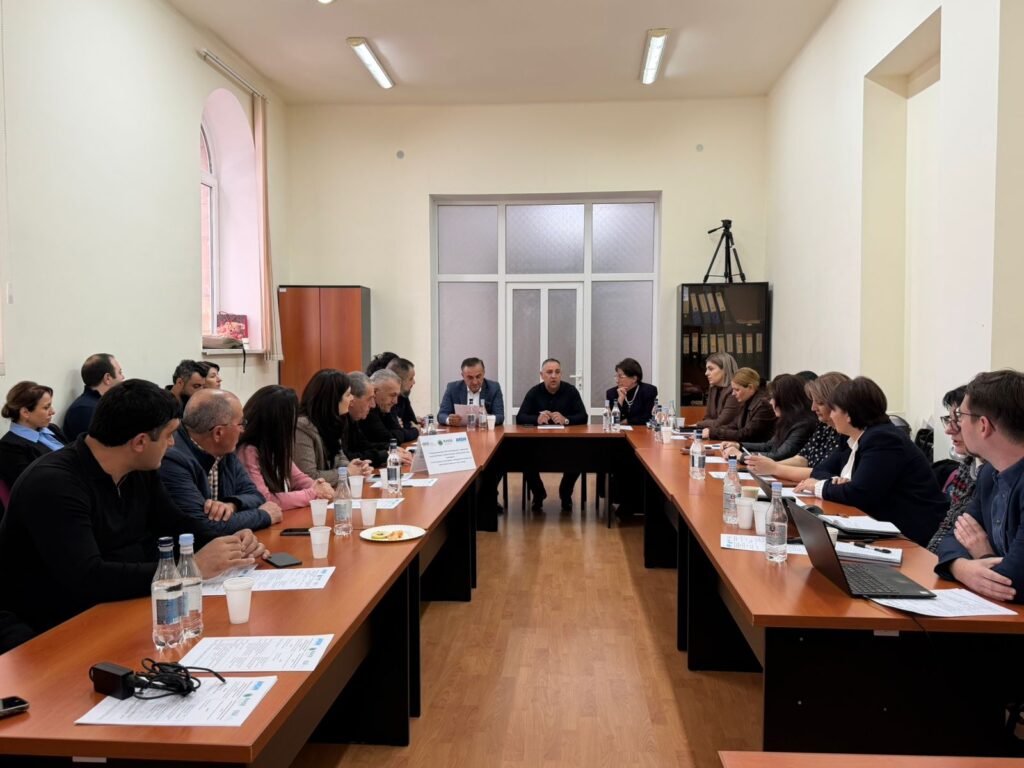
Together with our partners, the Armenian Association of Social Workers (AASW) and Enabling Social Impact (ESI) Consulting Group NGO, the project helped Vayk develop a Local Social Plan (LSP) that links social protection with employment. Residents shaped the plan through eight focus group discussions with 62 people and through town hall meetings. The Council of Elders of Vayk Community approved it on 31 August 2026, and 97.3% of the stakeholders involved were satisfied with both the process and the content.
An Inter-Sectoral Network of 18 representatives from the municipality, state agencies, and civil society now provides a platform for joint planning. After training and experience-sharing on Danish active labour market policies (ALMPs), 86% of local stakeholders reported increased knowledge of the approach.
In a pilot, 32 unemployed and vulnerable residents – including displaced persons from Nagorno-Karabakh – received individual support towards employment or self-employment. By the end of the project, 14 had found jobs in sectors such as education, tourism, retail, and food production. In total, 207 people took part in project activities.
What difference did it make?
For pilot participants, the support built both skills and confidence. Among the 21 participants who completed assessments, the average score for understanding job and business opportunities rose from 3.0 to 4.9 on a five-point scale. Confidence in presenting oneself to an employer rose from 2.8 to 4.9.
Participants valued having a social worker they could return to for guidance. At follow-up in September 2026, they were using what they had learned in job applications and at work, and those pursuing self-employment were developing business plans and seeking funding.
For the community’s 10,800 residents, the Local Social Plan gives Vayk an agreed framework, based on residents’ own priorities, for developing services and mobilising resources.
What we learned
- Support works best when it goes beyond training. Combining counselling, motivation, referrals, and follow-up through individual case management made the biggest difference.
- Cooperation is essential. Helping people into work requires the municipality, social services, civil society, and local employers to work together.
- Residents’ voices build ownership. Grounding the plan in both research and consultations with vulnerable groups strengthened local commitment to it.
- International examples matter. For many local stakeholders, the sessions on Danish ALMPs were their first contact with practical examples from another country. They built confidence that similar approaches could work in Vayk.
- Adopting the plan is only the first step. Follow-up support is needed to turn it into concrete activities, budgets, and responsibilities.